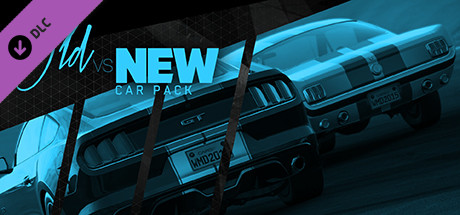
Project CARS - Old Vs New Car Pack
Released: 27/08/2015
Base Game
Project CARSDeveloper
Slightly Mad Studios
Publisher
Slightly Mad Studios, BANDAI NAMCO Entertainment, Electronic Arts
Description
Introduced in 1964, the Ford Mustang quickly became one of the company's most-recognizable models, single handedly starting the Muscle car revolution that shaped the American car market for more than a decade.
After the first one million road cars of the original Mustang had been build, Ford gave its best-seller an extensive upgrade, equipping the car with a more powerful 4.7 liter V8 engine and introducing the now-iconic Fastback body style.
Now, in 2015, the Mustang GT is the newest addition to Ford’s iconic range. Powered by a massive 5-liter V8 engine and delivering more than 428hp of power and 528 Nm of torque, buyers can choose between a full manual and automatic six-speed gearbox, the latter coming with genuine shifting paddles – a first in the long history of the Mustang.
Based on the Porsche 911 3.2, the 1987 CTR Yellowbird is one of Ruf’s most iconic models that has helped build Ruf's reputation for building no-compromise sports cars. The 3.4 liter twin-turbocharged flat six engine provided 469hp from two large turbo chargers & intercoolers and had been equipped with a new Bosch Motronic as well as an ignition setup originally designed for Porsche’s 962 Group C race car. Thanks to extensive weight-saving measures such as usage of fiberglass and aluminum, the CTR weighs just 1150 kilograms, resulting in a very impressive performance.
BMW's 2002 Turbo road car made the history books in 1973 by becoming Europe's first-ever mass-produced road car powered by a turbocharged engine. The 2002 Turbo's two-liter four cylinder engine provided 170hp of power, a figure that made the 2002 one of the most powerful cars on the road during its time. Unfortunately, the 1974 oil crisis forced an end to the 2002 Turbo's production after just one year as gas prices were soaring across the world. Only 1672 cars were produced during the model's limited production run, making the 2002 Turbo one of BMW's most iconic and most sought-after classics.
Built to the Super 2000 touring car regulations, the 320TC is BMW's weapon of choice for competition in the World Touring Car Championship (WTCC) and countless national touring car series around the globe.
Weighing 1170 kilograms, the car is powered by a 1.6 litreDI-turbo four-cylinder engine and a full adjustable six-speed sequential gearbox. Driven by veteran touring car aces such as Tom Coronel, Franz Engstler & Stefano D'Aste, the 320TC clinched five world championship wins.
Price
No data
Platforms

Followers
No data
Reviews
99% positive out of 71
Updated 25/02/2026 00:19
Metacritic
No data
Copies sold
No data
Revenue
No data
Twitch
No data
 View on SteamOfficial Website
Reviews History
What this shows: Review accumulation over time reveals player sentiment and community reception. The line tracks total review count growth—steep increases indicate viral moments or major updates. The colored bars show daily review breakdown: green (positive) vs. red (negative). Watch for sudden red spikes, which often signal controversies, technical issues, or unpopular changes. Sustained green dominance (70%+ positive) correlates with long-term sales success. For investors, review velocity matters—games maintaining 1,000+ reviews per month show healthy engagement. Compare review ratios to Metacritic scores to spot discrepancies between critic and player reception.
Player Statistics
What this shows: Concurrent player counts (CCU) and daily active users reveal real-time engagement with the game. High sustained CCU indicates healthy player retention, which drives ongoing revenue through in-game purchases, DLC, and premium subscriptions. Look for the 24-hour peak—multiplayer games should show clear patterns (evening spikes in major regions). Single-player titles typically see declining CCU over weeks unless major updates or discounts occur. For investors, sustained player counts months after launch signal successful live-service implementation. Sharp drops may indicate server issues, negative publicity, or loss of interest. This data complements revenue estimates—games with 100,000+ daily players usually generate significant recurring income.
Showing player statistics for the base game: Project CARS
Search Interest
What this shows: Google Search trends reveal public awareness and interest over time, independent of Steam metrics. Spikes indicate moments when the game captured mainstream attention—typically around announcements, trailers, beta releases, or launch day. Compare search interest to follower growth to gauge whether marketing efforts are reaching beyond the existing gaming community. For unreleased games, rising search volume suggests effective promotional campaigns. For released games, sustained search interest months after launch indicates lasting cultural relevance. Investors should note: viral search moments don't always translate to sales, but they do indicate brand awareness that could drive future DLC or sequel success. This data helps answer "Is anyone talking about this game outside of core gaming circles?"
Loading search interest data...