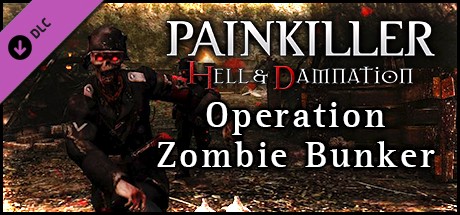
Painkiller Hell & Damnation: Operation "Zombie Bunker"
Released: 29/03/2013
Base Game
Painkiller Hell & DamnationDeveloper
The Farm 51
Publisher
Prime Matter
Description
Key Features
- New map: The Bunker (a dark air raid shelter complex in the 1940s) including a new boss-fight against one nasty red-coloured skull
- Reworked map: In Stalingrad (former “Leningrad”), it is on! Inbound airstrikes, airplanes, and Zeppelins firebombs our hero, and even deploy Zombie Soldiers from above!
- Area 51 and Cold War will hit you hard in the reworked map “Military Base” – Space Commandos, UFO boss fight, nuclear missiles
- Two new rocket launchers
- One new Multiplayer map: Fragenstein, playable in various Multiplayer modes
- New enemies: Russian, American, and German Zombie Soldiers as well as their tanks!
- New melee weapon: The “Morgenstern” - Smite your enemies with its spiky ball at short distances, or deploy sticky mines to battle from afar.
- New Silver Tarot card: Armor Regeneration (recharging your collected armor)
Price
$1.39
Platforms

Followers
No data
Reviews
65% positive out of 43
Updated 24/02/2026 12:22
Metacritic
No data
Copies sold
No data
Revenue
No data
Twitch
No data
 View on SteamOfficial Website
Reviews History
What this shows: Review accumulation over time reveals player sentiment and community reception. The line tracks total review count growth—steep increases indicate viral moments or major updates. The colored bars show daily review breakdown: green (positive) vs. red (negative). Watch for sudden red spikes, which often signal controversies, technical issues, or unpopular changes. Sustained green dominance (70%+ positive) correlates with long-term sales success. For investors, review velocity matters—games maintaining 1,000+ reviews per month show healthy engagement. Compare review ratios to Metacritic scores to spot discrepancies between critic and player reception.
Player Statistics
What this shows: Concurrent player counts (CCU) and daily active users reveal real-time engagement with the game. High sustained CCU indicates healthy player retention, which drives ongoing revenue through in-game purchases, DLC, and premium subscriptions. Look for the 24-hour peak—multiplayer games should show clear patterns (evening spikes in major regions). Single-player titles typically see declining CCU over weeks unless major updates or discounts occur. For investors, sustained player counts months after launch signal successful live-service implementation. Sharp drops may indicate server issues, negative publicity, or loss of interest. This data complements revenue estimates—games with 100,000+ daily players usually generate significant recurring income.
Showing player statistics for the base game: Painkiller Hell & Damnation
Search Interest
What this shows: Google Search trends reveal public awareness and interest over time, independent of Steam metrics. Spikes indicate moments when the game captured mainstream attention—typically around announcements, trailers, beta releases, or launch day. Compare search interest to follower growth to gauge whether marketing efforts are reaching beyond the existing gaming community. For unreleased games, rising search volume suggests effective promotional campaigns. For released games, sustained search interest months after launch indicates lasting cultural relevance. Investors should note: viral search moments don't always translate to sales, but they do indicate brand awareness that could drive future DLC or sequel success. This data helps answer "Is anyone talking about this game outside of core gaming circles?"
Loading search interest data...