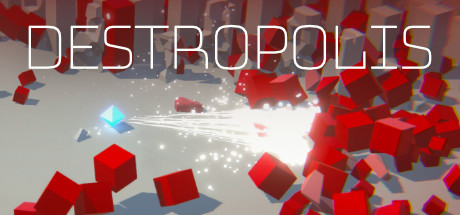
Destropolis
Released: 19/08/2020
Developer
Igrek Games
Publisher
Games Incubator, PlayWay S.A.
Description
Features
- Fight an endless wave of enemies in a futuristic city.
- Totally destructible environment. Every object in the game, every enemy, every building, can be smashed into pieces. You can blow up buildings, you can use them as cover, you can dismantle enemies bit by bit.
- 6 different types of enemies. Cubes are numerous and dangerous up close. Obelisks shoot lasers at you. Bomb spheres explode on contact. Pyramids shoot at you from a distance with artillery rounds. Wrecking balls smash everything on their path. Big, hexagonal bosses wreak havoc with their massive machine guns.
- 15 different guns at your disposal. Shotguns, assault rifles and machine guns shoot bullets that shred your enemies to pieces. Missiles and nuclear launchers create balls of fire that effectively clear out battlefields. Lasers and gauss guns cut through the enemies like knives through butter.
- 12 power-ups and 40 skills that enhance your abilities. Place turrets, create force fields and detonate nuclear explosions. Increase your health, damage or movement speed. Confuse your enemies that they will shoot at each other.
- Play alone, or with your friends in up to 3 players co-op mode.
- Compete with other players from around the world on global leaderboards.
- Unique art style. Clean and minimalistic environment. Distinct and aggressively colored enemies. Beautiful explosions and lighting effects.
- Synth-wave music. Created by a popular artist - LukHash. A fusion of chiptune mastery mingled with synthwave cyberpunk and EDM elements.
Price
$5.99
Platforms

Followers
987
Updated 25/02/2026 07:52
Reviews
89% positive out of 247
Updated 25/02/2026 00:36
Metacritic
No data
Copies sold
6.4K
Revenue
$10.8K
Twitch
No data
Highest ranking achieved on 23/06/2024
 View on SteamOfficial Website
Top Sellers Ranking
What this shows: Steam's top sellers ranking is updated hourly based on revenue, not unit sales. A game consistently in the top 20 demonstrates strong commercial performance. Look for sustained periods in high positions (green zones) which indicate stable revenue generation. Sharp drops often correlate with the end of promotional sales or the launch of competing titles. Investors should note that top 10 placements typically have significant impact on quarterly earnings, especially for mid-sized publishers.
Reviews History
What this shows: Review accumulation over time reveals player sentiment and community reception. The line tracks total review count growth—steep increases indicate viral moments or major updates. The colored bars show daily review breakdown: green (positive) vs. red (negative). Watch for sudden red spikes, which often signal controversies, technical issues, or unpopular changes. Sustained green dominance (70%+ positive) correlates with long-term sales success. For investors, review velocity matters—games maintaining 1,000+ reviews per month show healthy engagement. Compare review ratios to Metacritic scores to spot discrepancies between critic and player reception.
Followers History
What this shows: Follower count tracks ongoing community engagement over time. Unlike wishlists (which reflect purchase intent), followers indicate sustained interest and active monitoring. Rapid growth spikes often correlate with viral moments, major updates, or positive press coverage. For released games, continued follower growth suggests healthy long-term engagement, which supports DLC sales and live-service revenue. For unreleased games, steady upward trajectory indicates building hype. Compare the slope of this line to similar titles—steeper growth rates predict stronger commercial performance. Use the comparison feature to benchmark against up to 4 genre competitors simultaneously for comprehensive competitive analysis.
What this shows: Recent follower momentum across different time periods. Positive growth indicates increasing community interest and can signal upcoming catalysts like announcements, updates, or viral moments. Compare short-term (24h, 3D) vs long-term (14D, 30D) trends to identify acceleration or deceleration in community growth. Sudden spikes often precede or follow major news events.
Player Statistics
What this shows: Concurrent player counts (CCU) and daily active users reveal real-time engagement with the game. High sustained CCU indicates healthy player retention, which drives ongoing revenue through in-game purchases, DLC, and premium subscriptions. Look for the 24-hour peak—multiplayer games should show clear patterns (evening spikes in major regions). Single-player titles typically see declining CCU over weeks unless major updates or discounts occur. For investors, sustained player counts months after launch signal successful live-service implementation. Sharp drops may indicate server issues, negative publicity, or loss of interest. This data complements revenue estimates—games with 100,000+ daily players usually generate significant recurring income.
Search Interest
What this shows: Google Search trends reveal public awareness and interest over time, independent of Steam metrics. Spikes indicate moments when the game captured mainstream attention—typically around announcements, trailers, beta releases, or launch day. Compare search interest to follower growth to gauge whether marketing efforts are reaching beyond the existing gaming community. For unreleased games, rising search volume suggests effective promotional campaigns. For released games, sustained search interest months after launch indicates lasting cultural relevance. Investors should note: viral search moments don't always translate to sales, but they do indicate brand awareness that could drive future DLC or sequel success. This data helps answer "Is anyone talking about this game outside of core gaming circles?"
Loading search interest data...